Dust Extractors
Shop Vac vs. Dust Extractor for Garages
Compare shop vacs and dust extractors for garage workshops, including dry dust collection, general cleanup, liquid pickup, and tool use.
On this page
The real difference
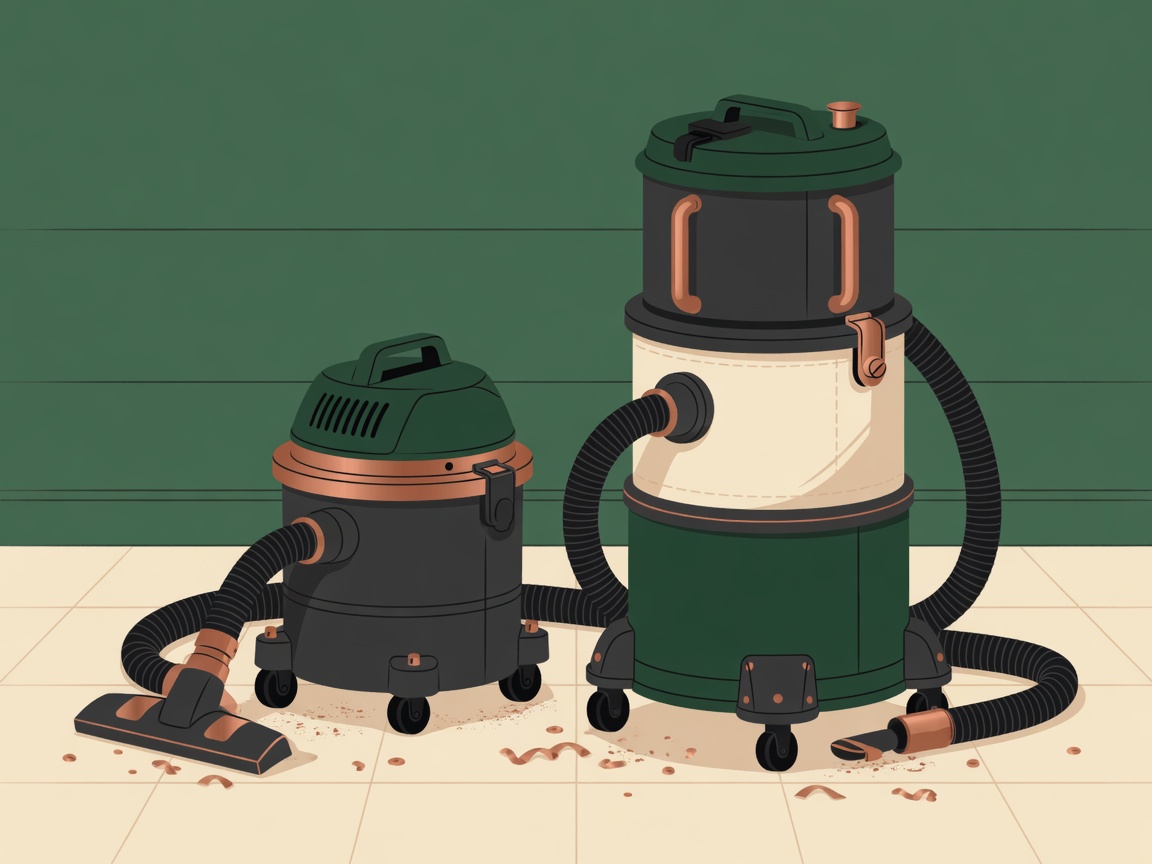
The category decision starts with the material you need to collect. A shop vac is the more natural fit when your work involves general cleanup and occasional liquid pickup, provided it is configured for wet use exactly as the manufacturer specifies. A dust extractor is the more focused choice when collecting dry dust from tools and work materials is the central task.
Choose based on the cleanup your shop creates most often: broad wet/dry utility points toward a shop vac, while dust-focused collection points toward an extractor. If both matter, confirm that the model and its setup support the type of collection you expect rather than assuming every vacuum handles wet pickup the same way.
Where each one fits
Match the machine to the work around it. A shop vac is the more natural fit when the main jobs are general cleanup, chips, and occasional liquid pickup. A dust extractor makes more sense when the vacuum will stay connected to a power tool and the priority is managing fine dust at the point of generation. Consider the tools you use most, the connectors or adapters they require, and whether the machine will move between benches, saws, sanders, and other equipment.
Material cleanup should guide the choice as much as suction. Coarser debris and mixed workshop messes favor a general-purpose cleanup setup, while repeated fine-dust collection calls for a system designed around tool connection and dust control. If liquid pickup is part of the workflow, confirm that the wet/dry vacuum is configured for wet use exactly as its manufacturer specifies before collecting liquid. That requirement can affect filters, bags, or other setup details, so it should be checked before the machine is used for both dry dust and spills.
In practical terms, choose a shop vac when versatility and occasional wet cleanup matter most. Choose a dust extractor when connected-tool work and fine-dust handling dominate. If your shop does both, decide which task is harder to compromise on, then verify that the chosen machine’s connections and operating setup support the tools and materials you use.
Specs that matter in the comparison
Compare the specifications that affect your actual workflow, not just the headline capacity. Check the tank or bag capacity against the amount of debris you typically collect, then look at filtration, airflow, suction, hose diameter, and port compatibility with your tools. A larger container may reduce emptying, but a hose or port mismatch can make tool-connected collection impractical. Also check whether the filtration setup is intended for the materials you handle and whether replacement filters, bags, and other consumables are readily available at a reasonable ongoing cost.
For wet cleanup, verify the manufacturer’s required configuration before using the vacuum for liquid pickup; a wet/dry vacuum should be set up for wet use as specified rather than treated as ready for every type of collection. Noise and mobility deserve equal attention: consider the sound level you can tolerate, cord and hose management, wheel design, carrying points, and how easily the unit can follow a tool around the shop. The better choice is the one whose capacity, connections, wet-use setup, handling, and running costs match your tools and routines—not necessarily the unit with the largest advertised figures.
How to choose between them
Start with the material your tools produce and the cleanup pattern you expect. Choose a dust extractor when fine dust collection at connected power tools is the main priority, especially if you clean continuously or want the collection system to remain central to the workflow. Choose a shop vac when the work is more varied and general-purpose cleanup matters as much as tool dust, including occasional debris collection and wet pickup.
Use frequency to settle close calls: frequent dust-producing work favors the dust-focused category, while intermittent cleanup usually makes the simpler general-purpose option more practical. If liquid pickup is part of the job, select a wet/dry model and follow the manufacturer’s required wet-use configuration. Finally, let the budget decide between priorities rather than headline features: direct more of it toward dust control and tool integration when those affect daily work, or toward capacity and broad cleanup utility when versatility matters more.
Equipment mentioned
Milwaukee 8960-20
Dust extractor for finer jobsite dust
A dust extractor identity used when comparing shop vacs with extractors.
Sources
Some links on this page are affiliate links marked “(paid link)”. As an Amazon Associate I earn from qualifying purchases. See the affiliate disclosure.
Find shop vacs on Amazon (paid link)
Keep reading
Related guides
How to Choose a Shop Vac
Wet or dry, tank size, filters and the jobs a shop vac actually handles.
Choosing a Shop Vac for Drywall Dust
Fine dust, filtration and a setup that does not clog immediately.
How Shop Vac Filters Work
Filter types, when to clean them, and when to replace them.