Filters & Accessories
What HEPA Means on a Shop Vac
Learn what a HEPA label means on a shop vac, what the 99.97% figure covers, and when it matters for dust and cleanup tasks.
On this page
What HEPA actually means
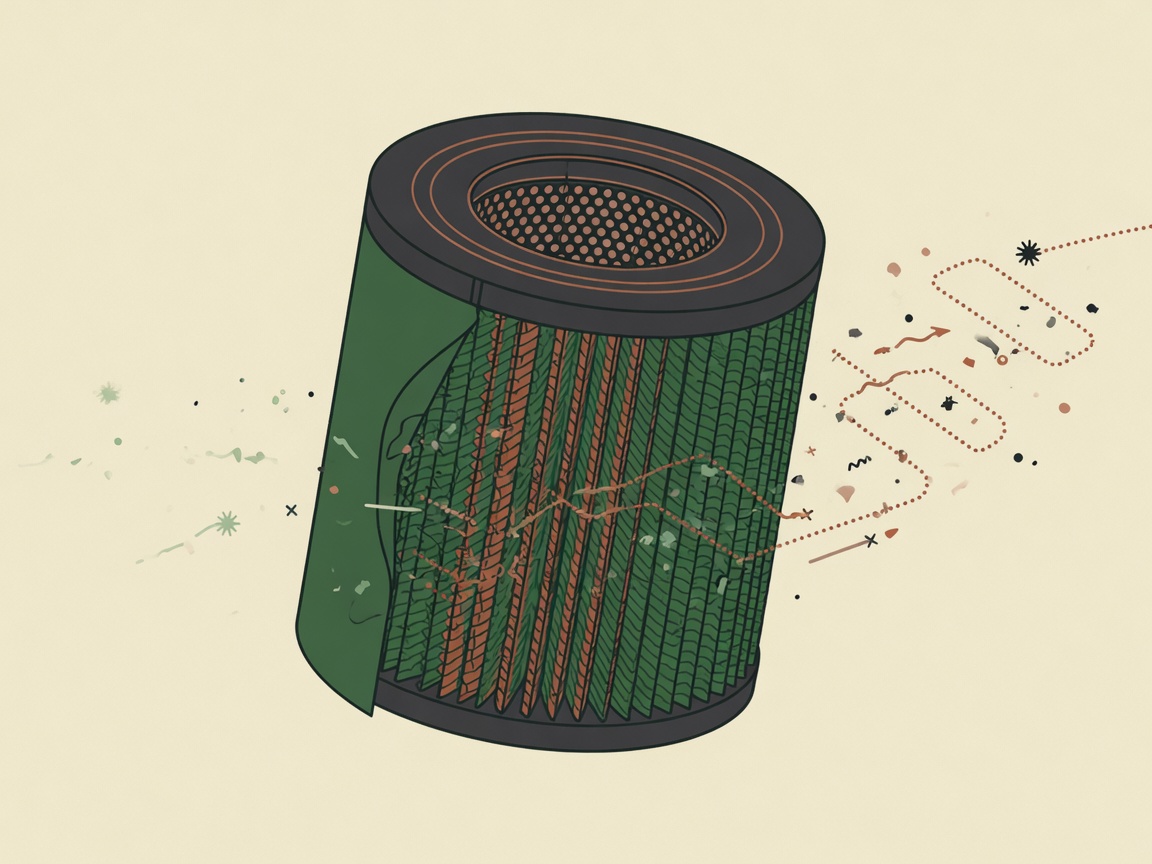
On a shop vac, HEPA refers to a high-efficiency particulate filter. The label is intended to communicate a particle-capture performance level: HEPA filters are commonly specified to capture at least 99.97% of particles measuring 0.3 microns under the applicable test method. That figure describes the filter’s performance in the test—not the vacuum’s total cleaning performance in every situation.
A HEPA label therefore tells you about filtration, not suction power, airflow, hose design, capacity, or how well the machine collects dust before it reaches the filter. It also does not by itself establish that the complete vacuum setup is OSHA compliant. The filter must be installed correctly, kept in suitable condition, and used with a system that does not allow leaks around the filter or through the vacuum housing.
HEPA matters most when the cleanup task involves fine airborne dust and reducing the amount of filtered dust returned to the room is important. For ordinary coarse debris or liquid pickup, the label may be less relevant than the vacuum’s wet/dry design and general capacity. For a specific dust such as drywall or woodworking dust, consider HEPA as one part of the setup alongside source capture, compatible bags or prefilters, seals, and maintenance; the related articles on dust collection and filter operation cover those choices in more detail.
What the specification covers — and what it does not
A HEPA label describes the filter’s particle-capture performance under its applicable test method. It does not, by itself, describe the complete shop-vac system or guarantee that no dust will escape elsewhere. The result also depends on how the filter is installed, whether seals and connections remain intact, and how the vacuum is operated and maintained.
The label is therefore most useful as one part of a dust-control decision. It matters when the cleanup involves fine airborne particles and reducing their return to the room is important. It does not automatically make the vacuum suitable for every material, every hazard, or every cleanup method, and it should not be treated as proof of regulatory compliance.
Maintenance also affects the practical result. A loaded or clogged filter can reduce airflow until it is cleaned or replaced according to the manufacturer’s instructions. For that reason, consider the HEPA specification alongside the dust type, the collection setup, the condition of the filter, and the task’s safety requirements.
When it changes the job
A HEPA label matters when the cleanup problem is fine airborne dust, not simply when you need a vacuum that can pick up water or large debris. For routine garage dirt, chips, leaves, or liquid recovery, capacity, hose fit, and wet/dry capability may matter more. For sanding residue, drywall dust, or other powder that can remain suspended and be redistributed through exhaust or handling, finer filtration becomes a more relevant part of the decision.
Treat HEPA as one part of a dust-control setup rather than a complete answer. The filter must be installed correctly, kept in usable condition, and matched to the vacuum and task. A loaded or clogged filter can restrict airflow, so maintenance affects how well the vacuum continues to collect dust. Also consider how dust enters the vacuum, whether connections leak, and how the filter is removed and cleaned; those details influence exposure during use and emptying.
The practical question is therefore not simply “Does this shop vac say HEPA?” Ask what material you are collecting, how much fine dust may become airborne, and whether the vacuum’s compatible bags, filters, seals, and accessories support that task. If the job is mainly bulk debris or water, HEPA may add little value. If the priority is reducing fine dust in the air, it deserves closer attention—but it does not by itself establish regulatory compliance or guarantee a dust-free cleanup.
How it relates to nearby specs
HEPA belongs in the filtration part of a shop-vac specification, not in the same category as airflow or suction measurements. CFM and water lift describe how the machine moves air and handles resistance; micron language describes particle size. HEPA primarily describes how effectively the filter captures particles under its applicable test method. HEPA filters are commonly specified to capture at least 99.97 percent of 0.3-micron particles.
That distinction helps prevent a common buying mistake: treating a HEPA label as a complete description of dust-collection performance. For a fine-dust task, use it as a filtration checkpoint, then consider whether the rest of the setup supports the job—such as the hose, seals, prefilter or bag arrangement, and how the vacuum will be emptied. Those details affect how much dust escapes during actual use, even though they are not what the HEPA designation itself measures.
For ordinary chips, dirt, liquid, or larger debris, HEPA may not be the deciding specification. It matters more when the cleanup involves fine airborne dust and reducing the amount that passes through the filtration system is a priority. If the task has specific health, workplace, or hazardous-material requirements, a HEPA label alone should not be treated as proof that the complete vacuum setup meets them.
What to check before you buy
Before buying, verify exactly what the manufacturer calls HEPA. Look for the claim on the filter, replacement part, or product documentation—not just a general statement that the vacuum has “high-efficiency” filtration. A HEPA filter is commonly specified to capture at least 99.97% of 0.3-micron particles under the applicable test method, but that specification applies to the filter’s stated performance, not automatically to every part of the vacuum or every cleanup result.
Check that the HEPA filter is made for the specific shop-vac model and that the manufacturer permits it for the task you have in mind. The filter must fit and seal as instructed; an incompatible part, damaged gasket, loose cover, or bypass around the filter can undermine the intended filtration. Follow the manufacturer’s installation, cleaning, replacement, and wet-use instructions rather than assuming a HEPA filter can be handled like a standard cartridge.
Plan for maintenance as part of the purchase. Confirm that replacement filters are available and that the maintenance process suits your workspace and the material being collected. Avoid shaking or emptying fine dust in a way that simply puts it back into the air.
Finally, match the claim to the job. HEPA filtration matters most when the cleanup involves fine dust that could become airborne and when reducing that airborne dust is a priority. It is less central when the main task is collecting coarse debris or ordinary wet material.
Common misconceptions
A HEPA label is not a suction rating. It describes the filtration component, while pickup performance also depends on the vacuum’s airflow, lift, hose, attachments, and how much dust has accumulated in the filter. A machine can have fine-particle filtration without being the right choice for moving heavy debris or collecting material through a restrictive setup.
It also does not promise dust-free operation. Air can escape through poor seals, an incorrectly installed filter, a damaged component, or an unsuitable collection setup. The label should therefore be read as information about the filter—not as a guarantee that every part of the machine captures dust equally well.
HEPA does not remove maintenance from the job. As a filter loads, airflow can fall; cleaning or replacement must follow the manufacturer’s instructions. That matters especially during fine-dust work, where a neglected filter can affect both performance and containment.
The practical question is whether the task creates fine airborne dust that needs stronger filtration control. For routine liquid pickup or large, coarse debris, the HEPA designation may not be the deciding feature. For work where fine dust could remain suspended or escape during cleanup, it becomes more relevant—but it still needs to be matched with compatible filters, sound seals, suitable collection practices, and a machine designed for the task. HEPA also does not make one shop vac appropriate for every cleanup job.
Sources
Some links on this page are affiliate links marked “(paid link)”. As an Amazon Associate I earn from qualifying purchases. See the affiliate disclosure.
Find HEPA shop vac filters on Amazon (paid link)
Keep reading
Related guides
How to Choose a Shop Vac
Wet or dry, tank size, filters and the jobs a shop vac actually handles.
Choosing a Shop Vac for Drywall Dust
Fine dust, filtration and a setup that does not clog immediately.
How Shop Vac Filters Work
Filter types, when to clean them, and when to replace them.